The Data Behind the EU Pay Transparency Directive
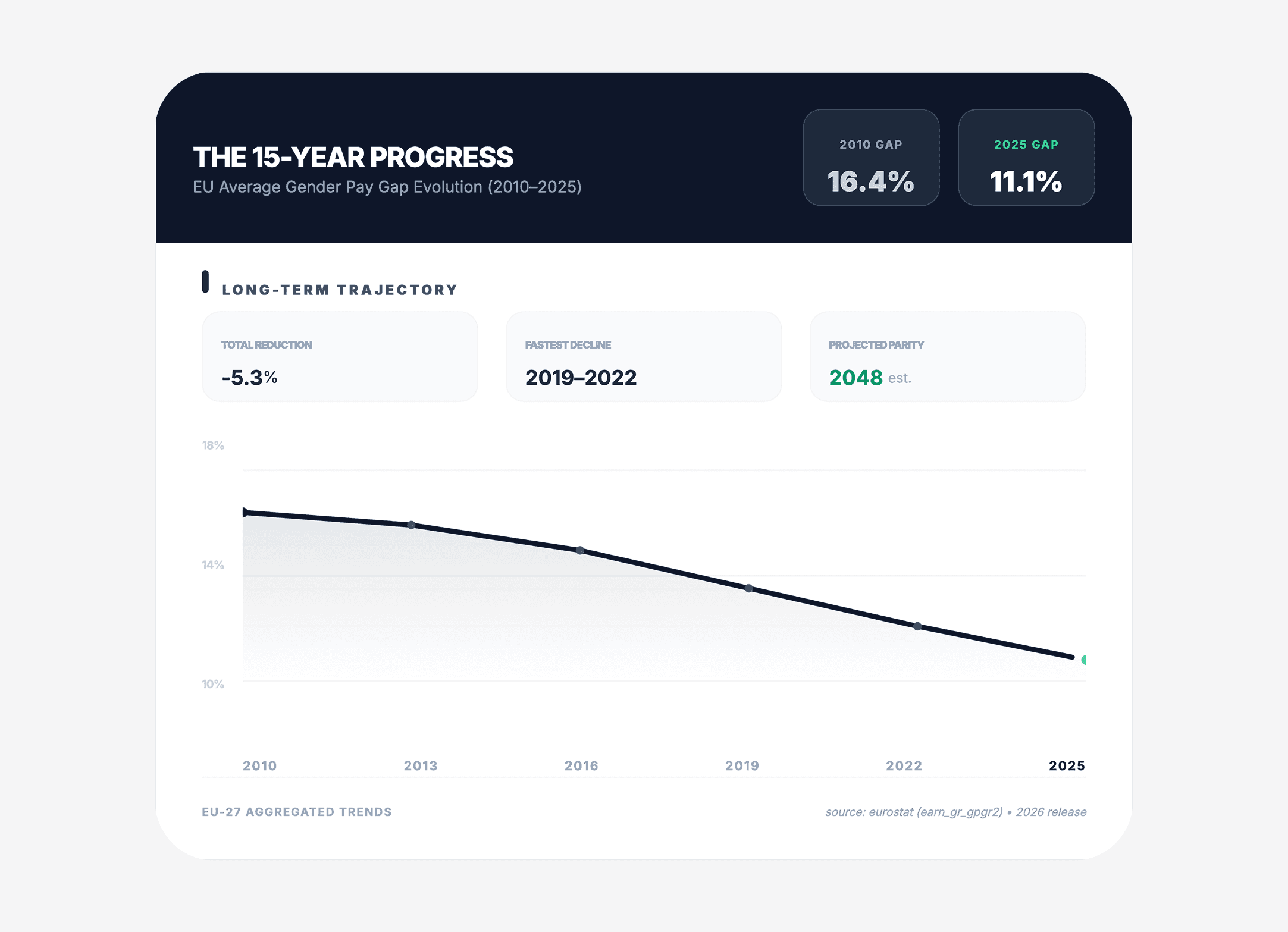
In my previous post I talked about the new EU Pay Transparency Directive that is set to go live this summer, and aims to make salaries more transparent. Is this something we really need?
While it is nice to think we are moving toward equality, the unadjusted gender pay gap across Europe remains stubbornly inconsistent and, in many places, surprisingly high.
According to the latest Eurostat and EIGE figures, the "average" EU gap sits around 12%, but that average hides a massive spectrum of disparity:
🏗️ The Widest Gaps: Estonia (18.8%), Latvia (19%), and Germany (17.6%) currently record the highest pay disparities in the EU, proving that even the most robust economies face deep structural challenges.
🌱 The Smallest Gaps: At the other end, Luxembourg (-0.8%) and Belgium (0.7%) have virtually closed the gap, largely through strict legislative frameworks and transparent wage grids.
📉 The "Management Gap": The disparity isn't just about different roles; it's about hierarchy. Managerial positions in the EU still see women earning roughly 23% less per hour than their male counterparts.