Organising 600+ articles for 20 teams
23%
Active user time
5 out of 5
Average user rating
Information Architecture was crucial to ensure the teams only saw relevant content
Customers need to get the same treatment, regardless who handles their query, to stay compliant with the financial regulations. A complete knowledge base was therefore important to implement for our 5k global Customer Support agents, answering up to 2M questions on average on a monthly basis.
1 month
Duration
Main designer in crossfunctional team
Role
Klarna AB
Company
Problem
Customer Support had a knowledge base, but it was build on an old platform that was set to be deprecated. With the need for a migration, Product decided it would be a good opportunity to also rebrand and reorganise the knowledge base that housed over 200 articles.
The main complaint from the 'soon to be deprecated' knowledge base was that it was hard to find the information you needed when you needed it. Efficiency is of the essence when handling many questions over chat, phone and email. This issue risked inconsistencies in the way our customers were treated, so I focused on the search functionality and information architecture of the new knowledge base.
Discovery
The PM and tech had decided to go with a headless CMS, since our Merchant Support already had a knowledge base which we could use for the layout. That meant it was up to me to decide how we would brand it and how we would organise the articles.
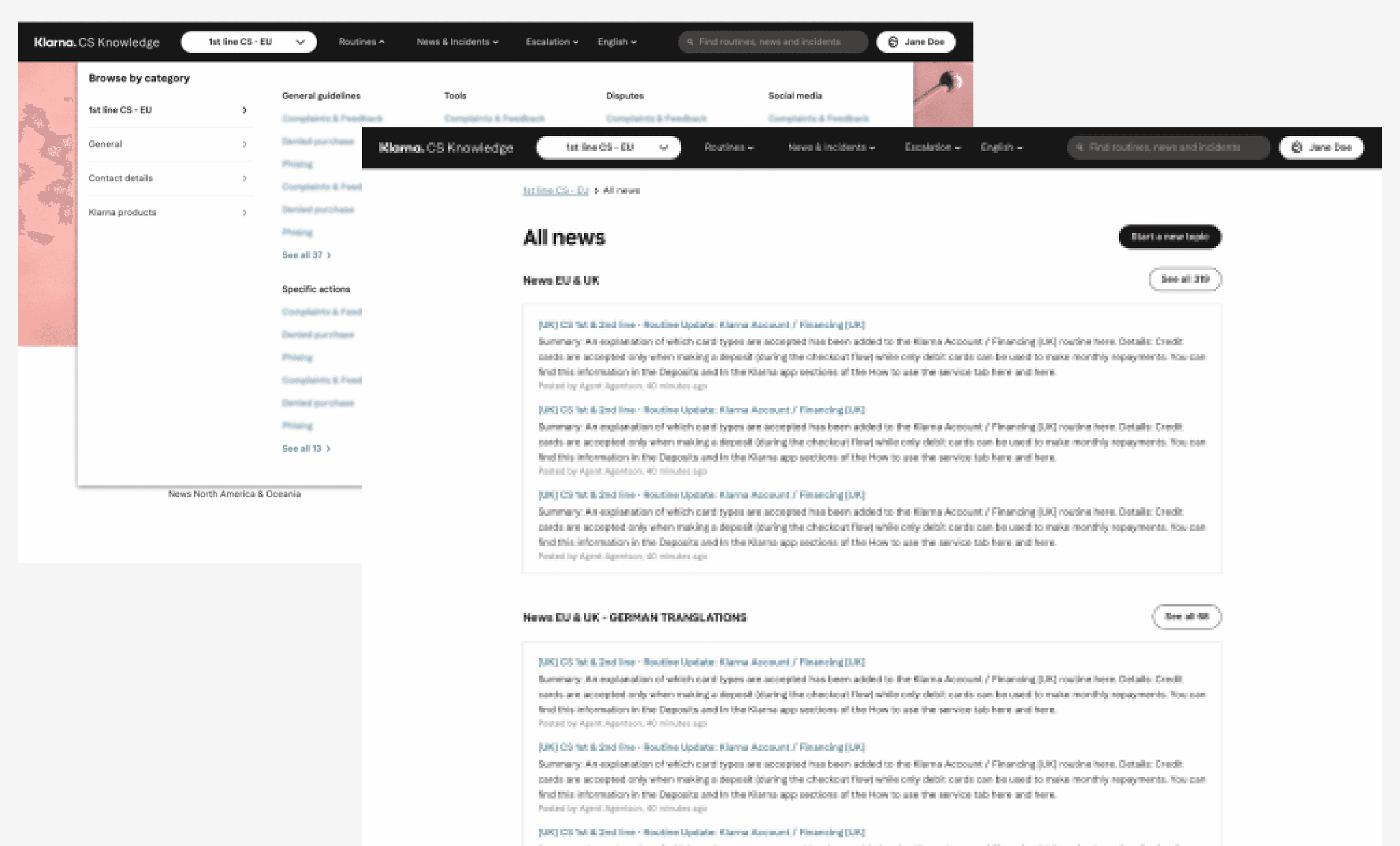
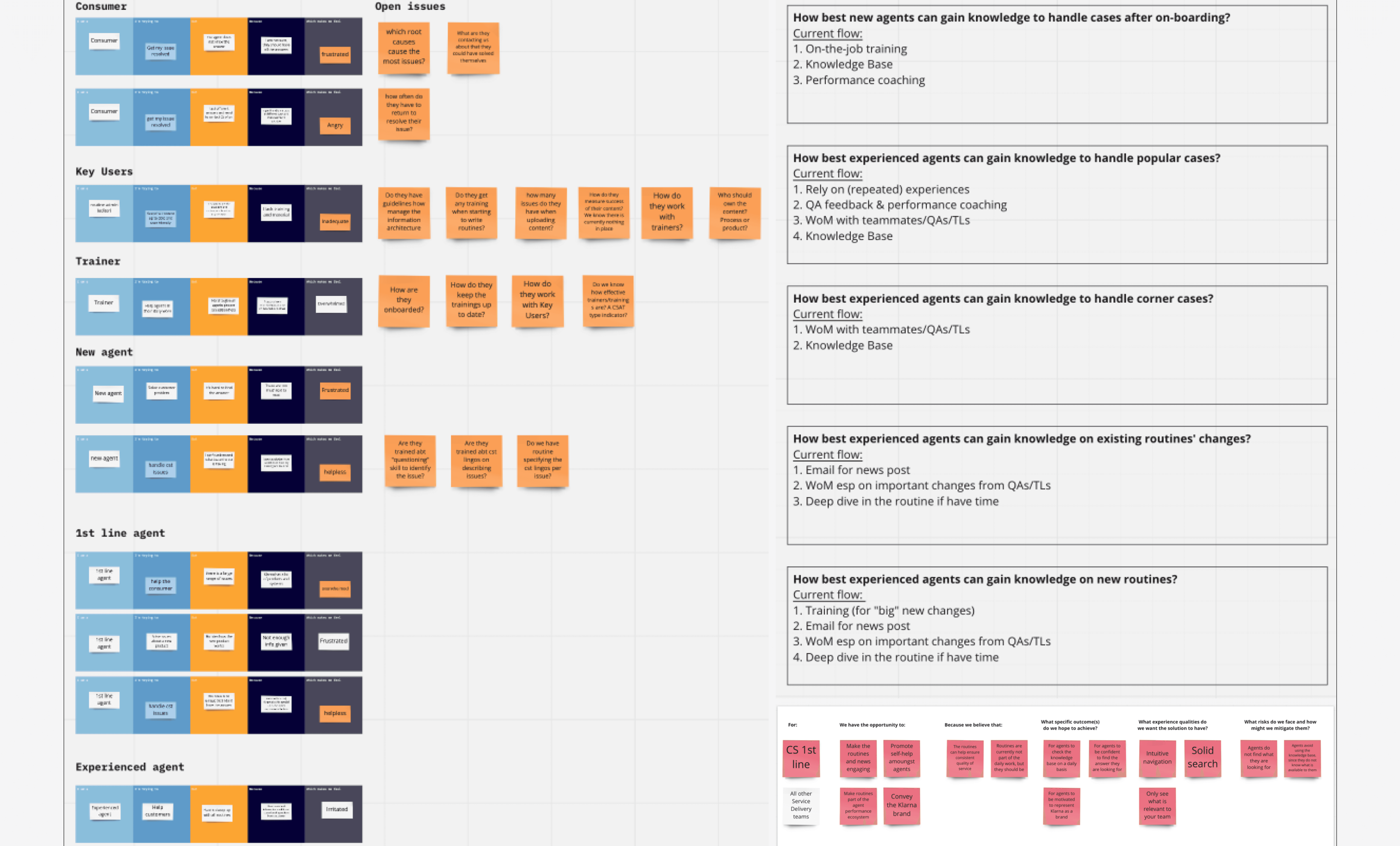
In parallel a different team was tasked to clean up the articles as much as possible so as to not migrate messy content to the new solution. The main categories that needed to be organised were: knowledge articles, general news and incident information. This was all mapped out during a workshop I lead with different stakeholders. This exercise helped to inform the final information architecture.
Iterations
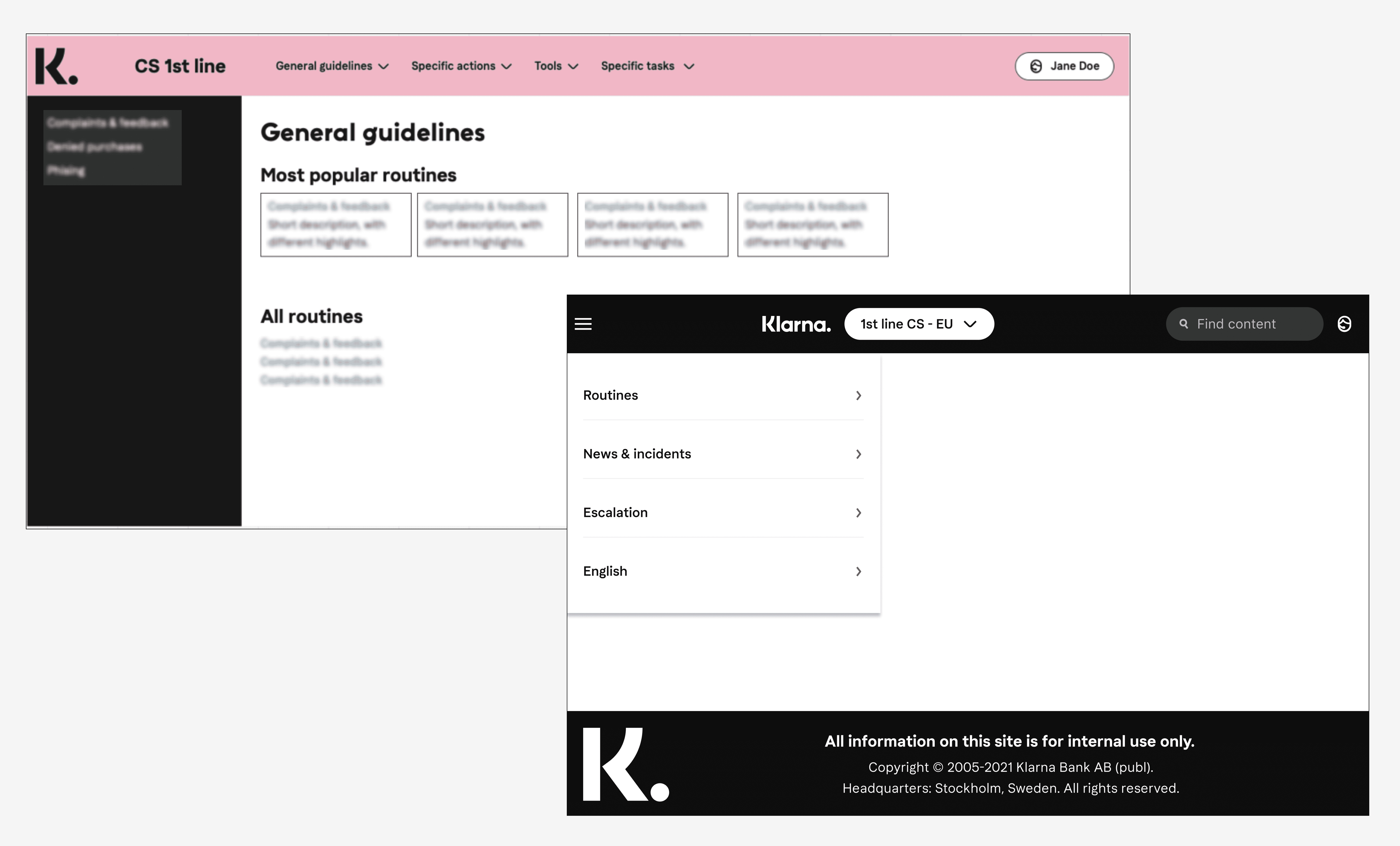
The iteration phase was focused on filtering down the right content for the right team and market. Certain routines only applied to Germany or US, so there was no point in showing those articles to agents from other markets. That initial filtering and grouping up per specialisation and region already did wonders in the "findability" of content.
In addition to the filtering, the visual hierarchy between the different types of content also helped the agents to quickly find what they needed, when they needed it.
Solution
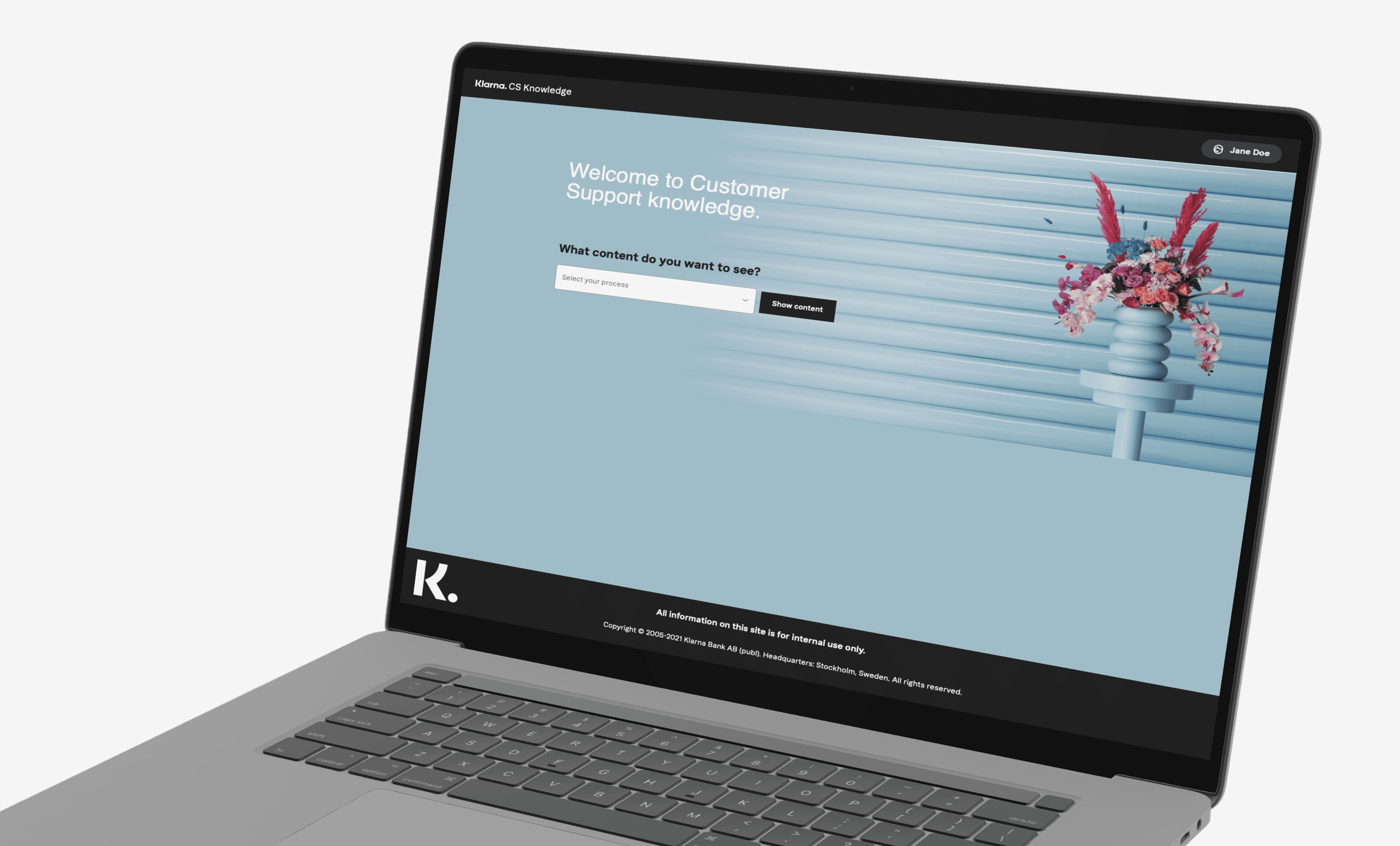
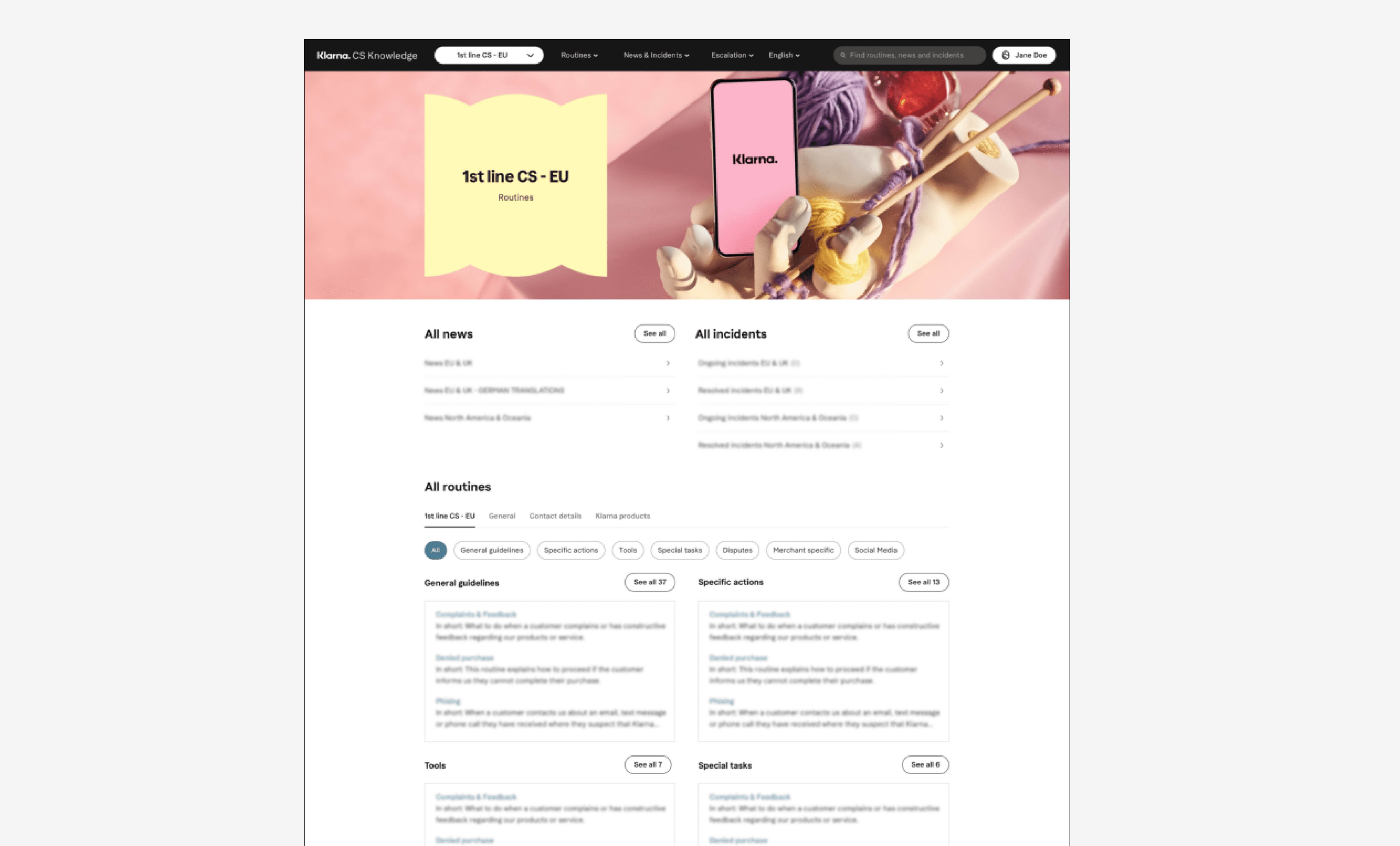
The final solution had a welcoming Klarna branding (the old solution had no branding) and a clear information architecture and filtering. Thanks to these updates we saw an uptick in usability of the articles. We followed the release with a survey to check user satisfaction and a whopping 89% scored it a 5 out of 5. Due to the short timeline we did not do a survey beforehand on the old solution, but we still counted this as a big win.